
Last modified: 21. November 2026
Manual Kill & Choke (K&C) line connections require significant crew effort and favourable weather. On offshore rigs, safety concerns and weather delays can disrupt drilling schedules.
This article covers:
-
Why traditional K&C connection methods are a bottleneck for modern rigs
-
How a hands-free, remote-controlled solution can reduce connection times from hours to minutes
-
The safety and commercial benefits of hands-free connections in offshore operations

Why are manual Kill & Choke connections challenging?
Connecting and disconnecting Kill & Choke (K&C) lines is a critical offshore rig operation. The work requires manual effort, precise coordination and favourable weather. It takes operational time and exposes crew members to significant safety hazards.
Despite advances in rig technology, many operators still rely on manual methods that are time-consuming and sensitive to environmental factors.
Related article
Emergency Disconnects Made Safer with Future Production’s ADS Technology
How long do manual Kill & Choke connections take and what are the risks?
A manual Kill & Choke connection commonly takes 10 to 12 hours from start to finish and requires significant procedural oversight. Before such operations can even begin, formal approval from rig management is necessary, following a comprehensive risk assessment. This typically includes a Safe Job Analysis (SJA, TEBRA) to identify and mitigate potential hazards.
The physical demands are equally challenging. Several crew members must operate winches and personnel baskets over open sea to manoeuvre personnel and hoses weighing 3 to 5 tons and measuring 20 to 30 meters. These hoses must then be attached to a moving slip joint. Harsh and unpredictable offshore conditions can make this task more difficult.
Key concerns
-
Safety Hazards: Heavy equipment handling over open sea significantly increases the risk of serious personnel injuries.
-
Weather Delays: Rough seas can force the rig crews to postpone operations, driving up non-productive time (NPT) and operational costs.
How does FP-ClickStab® automate Kill & Choke connections?
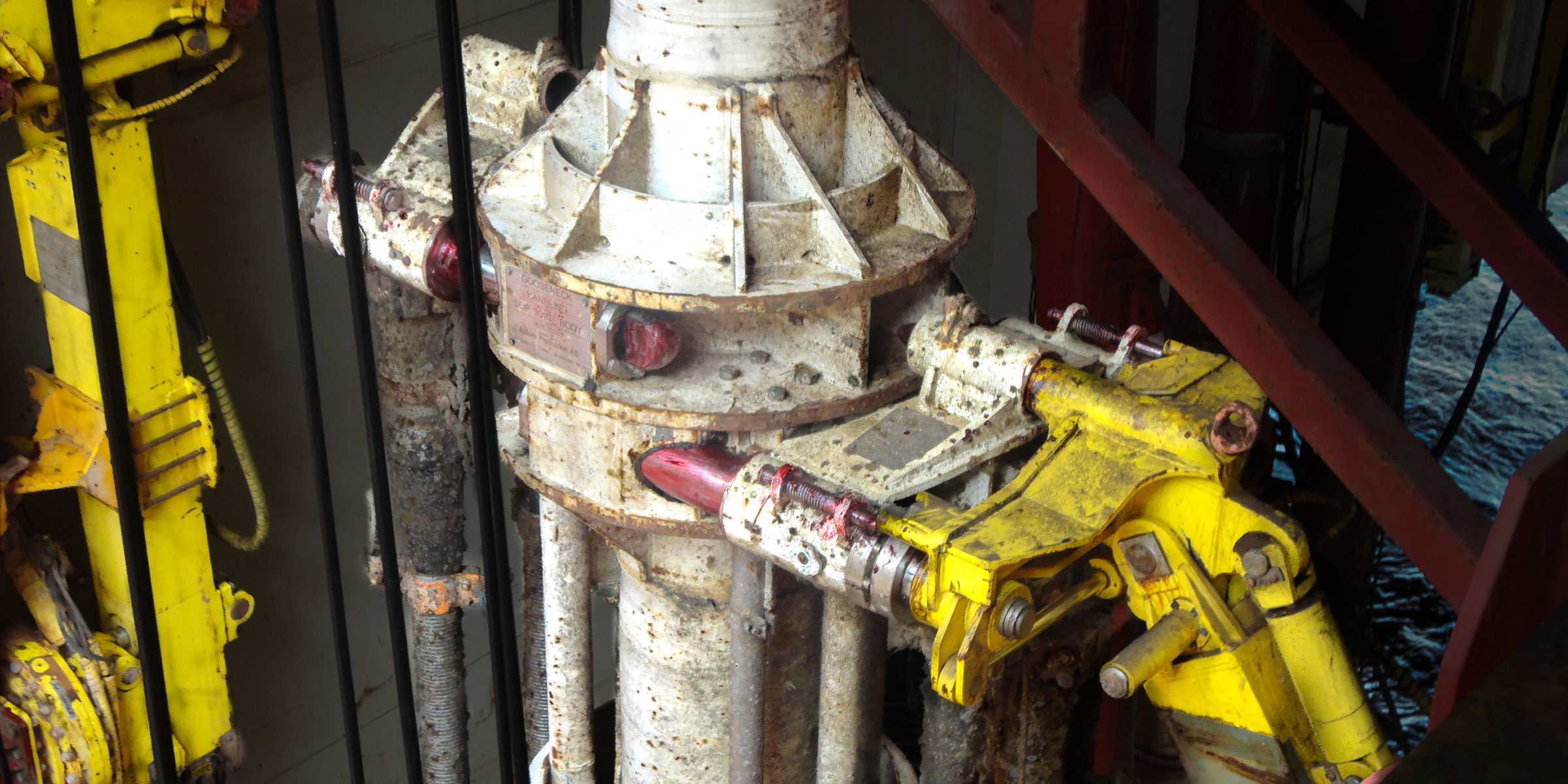
Future Production developed the FP ClickStab® system for hands-free, remote-controlled K&C line connections.
Key advantages
- Remote Control: Enables single-operator control from a safe location.
- Rapid Connection: Reduces connection or disconnection time to 10 minutes.
- Adaptable Design: Can be integrated into various rig layouts, as retrofit or newbuild.
- Enhanced Safety: Eliminates manual handling over the open sea.
Related article
Redefining MPD Deployment: From 48 Hours to 15 Minutes with FP ClickStab® Technology
What are the operational benefits of automated Kill & Choke connections?
The FP ClickStab® system reduces non-productive time (NPT) and personnel exposure during K&C connections.
-
Substantial Reduction in NPT
-
Minimized Personnel Risk
-
Lower Long-Term Operational Costs
-
Increased rig attractiveness
Implementing hands-free Kill & Choke connections
Remote-controlled, hands-free equipment shortens Kill & Choke connections and eliminates manual handling over open sea.
Contact us today to discuss the requirements for your rig.
Kill & Choke connections FAQ
How long does it take to connect Kill & Choke lines manually?
A manual Kill & Choke line connection commonly takes 10 to 12 hours from start to finish.
How quickly can FP-ClickStab® connect or disconnect Kill & Choke lines?
The FP-ClickStab® system reduces Kill & Choke line connection or disconnection time to 10 minutes.
How does FP-ClickStab® reduce crew exposure during Kill & Choke connections?
A single operator can control the system remotely from a safe location. The system eliminates manual handling over open sea.
Can FP-ClickStab® be retrofitted to an existing rig?
Yes. The system can be integrated into various rig layouts as a retrofit or in a newbuild.
SUBMIT YOUR COMMENT